
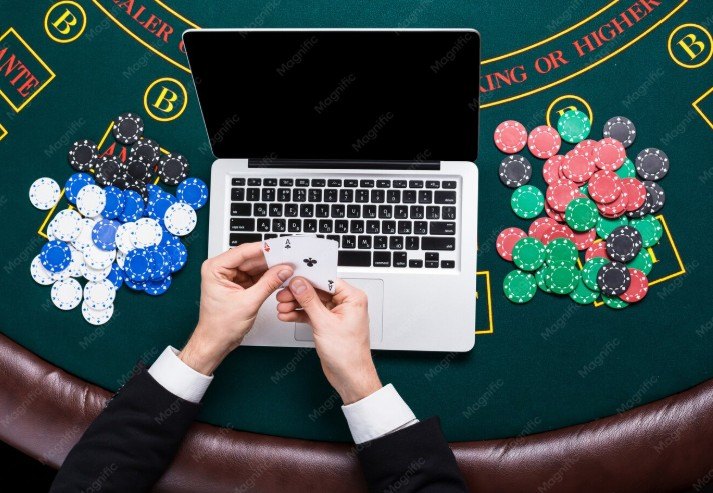
Online Dragon Tiger vs Physical Card: Kya Probability Honi Hai?
Ek table par physical cards rakhe hain.
Dealer shoe se do cards nikalta hai:
Dragon → 9
Tiger → King
Tiger wins.
Dusri taraf phone screen par online Dragon Tiger chal raha hai. Animation mein bhi cards deal hote dikh rahe hain:
Dragon → 9
Tiger → King
Screen par bhi Tiger wins.
Visually dono almost same lag sakte hain.
But mathematically ek important question hai:
“Kya online cards aur physical cards ke peeche same probability mechanism hona zaroori hai?”
Not necessarily.
What matters is not only what appears on the screen. What matters is how the underlying result is generated.
A physical shoe, a live-dealer stream, a freshly shuffled virtual deck and an independently generated digital result can all display the same Dragon/Tiger interface while having different dependence structures across rounds.
Physical Dragon Tiger Mein Basic Mathematical Model Kya Hai?
Start with our simplified single-deck physical model:
- 52 standard cards
- 13 ranks
- 4 cards per rank
- Ace treated as low
- King treated as high
- One card to Dragon
- One card to Tiger
- Higher rank wins
- Same rank produces Tie
There are:
52 × 51 = 2,652
possible ordered two-card deals.
For a Tie, after the first card is dealt, three cards of the same rank remain among 51 cards.
Therefore:
P(Tie) = 3/51 = 1/17 ≈ 5.88%.
By symmetry:
P(Dragon) = 8/17 ≈ 47.06%
P(Tiger) = 8/17 ≈ 47.06%.
These figures describe this particular simplified model.
Change the number of decks or dealing rules and some probabilities can change.
Physical Shoe Mein Previous Cards Matter Kar Sakte Hain
Suppose cards are not returned after every round.
Round 1 removes:
K and 3.
Round 2 removes:
Q and 7.
Those cards are no longer available for later rounds until the shoe is reshuffled.
Therefore the composition changes.
Initially:
P(next card is King) = 4/52 ≈ 7.69%.
After one King has been removed and 50 other cards remain with it excluded appropriately, the probability of seeing another King changes according to the number of cards currently left.
This is ordinary sampling without replacement.
So in a continuing physical shoe:
Round 20 is not necessarily generated from exactly the same card composition as Round 1.
Previous exact cards can therefore contain information about the remaining shoe.
Online Dragon Tiger Ke At Least Three Different Models Ho Sakte Hain
“Online Dragon Tiger” is not one mathematical mechanism.
Consider three hypothetical implementations.
Model A: Live physical shoe.
A real dealer deals real cards while cameras stream the table online.
Mathematically, this can behave like a physical finite shoe because cards actually leave the shoe as rounds are played.
Model B: Virtual persistent shoe.
Software creates a digital representation of one or more decks, shuffles them and removes virtual cards as rounds occur until a programmed reshuffle point.
This can mathematically resemble physical dealing without replacement even though no physical cards exist.
Model C: Independent digital rounds.
Each round is generated independently according to a defined probability mechanism, without preserving the previous round’s virtual card removals.
In that case, a King shown ten rounds ago may have no effect on the probability of a King in the next round.
All three systems could display:
Dragon card → Tiger card → winner
on the screen.
The animation alone doesn’t tell us which underlying model is being used.
Same Single-Round Probability, Different History Mathematics
This is the most interesting distinction.
Two systems can potentially have very similar single-round outcome probabilities while behaving differently across multiple rounds.
Imagine System A deals from a continuing physical shoe.
System B generates every round from a fresh virtual deck.
At the beginning of a fresh shoe, both might follow the same simplified one-deck distribution:
Dragon ≈ 47.06%
Tiger ≈ 47.06%
Tie ≈ 5.88%.
But after cards have been removed from System A, its remaining composition changes.
System B may reset to the original distribution every round.
So:
same-looking marginal probabilities do not necessarily imply the same conditional probabilities across history.
This matters when someone tries to use previous cards to calculate the future.
Example: Three Kings Already Nikal Chuke Hain
Suppose a physical continuing shoe started with one standard deck.
Three Kings have already appeared and remain discarded.
Only:
1 King
remains.
If enough other exact removals are known, we can calculate the updated probability of drawing that final King from the remaining shoe.
Now compare an online model that generates every round from a fresh 52-card virtual deck.
In that hypothetical system, the three Kings displayed in previous rounds do not remain removed.
The new round again begins with:
4 Kings out of 52 virtual cards.
Therefore:
physical continuing shoe: previous Kings may matter.
fresh-reset digital model: previous Kings may not matter.
The visible history can be identical while its mathematical relevance is completely different.
Does Online Animation Prove Virtual Cards Are Being Dealt?
No.
Suppose the screen shows:
deck animation,
card movement,
Dragon card flip,
Tiger card flip,
and then winner animation.
It’s tempting to assume:
“Animation mein card abhi flip hua, toh result bhi isi moment generate hua hoga.”
But animation and result generation are separate technical concepts.
A hypothetical digital system could:
generate the result first → then animate the corresponding cards.
Another could:
select virtual cards sequentially → then render them immediately.
A live system could simply:
display real physical cards through video.
Without verified technical information about a particular implementation, the screen presentation alone cannot establish the order in which backend events occur.
This is why visual timing should not be confused with mathematical generation.
Multi-Deck Physical Shoe Se Probability Bhi Change Ho Sakti Hai
Even “physical cards” does not automatically mean our single-deck figures apply.
Suppose there are d decks.
Total cards:
52d.
After the first card is dealt, there are:
52d – 1
cards left.
Cards sharing the first card’s rank:
4d – 1.
Therefore:
P(Tie) = (4d – 1)/(52d – 1).
Examples:
| Decks | Illustrative Tie Probability |
|---|---|
| 1 | 3/51 ≈ 5.88% |
| 2 | 7/103 ≈ 6.80% |
| 4 | 15/207 ≈ 7.25% |
| 6 | 23/311 ≈ 7.40% |
| 8 | 31/415 ≈ 7.47% |
As the number of decks becomes very large, this approaches:
1/13 ≈ 7.69%.
So before comparing online and physical results, we need to know what mathematical model each system actually uses.
How Could Online vs Physical Results Be Compared Scientifically?
Suppose we have two large datasets:
Dataset A: physical/live Dragon Tiger.
Dataset B: online digital Dragon Tiger.
We should not just compare:
“Dragon kitni baar aaya?”
A more informative analysis could examine:
overall Dragon frequency,
overall Tiger frequency,
Tie frequency,
rank frequencies,
streak-length distribution,
transition probabilities,
conditional outcomes after known card removals,
and behaviour around reshuffle/reset points.
For example, suppose we calculate:
| Metric | Physical Sample | Online Sample |
|---|---|---|
| Dragon | 47.3% | 47.0% |
| Tiger | 46.9% | 47.2% |
| Tie | 5.8% | 5.8% |
These fictional numbers look almost identical.
But that still would not prove the mechanisms are identical.
One system could have finite-shoe dependence while the other independently reproduces the same marginal frequencies.
To distinguish them, we would need to analyse the sequence structure and card-level information, not only overall percentages.
Frequently Asked Questions
Is online Dragon Tiger mathematically the same as physical Dragon Tiger?
Not necessarily. It depends on how the online result is generated. A live physical shoe, persistent virtual shoe and independently generated digital round can have different cross-round mathematics.
Can online Dragon Tiger have the same Dragon/Tiger percentages as physical cards?
Yes. Two different mechanisms can produce similar overall outcome frequencies. Similar percentages alone do not prove that the underlying processes are identical.
Do previous cards matter in physical Dragon Tiger?
They can if cards continue to be dealt without replacement from the same finite shoe. Exact removed cards then change the composition of what remains.
Do previous cards always matter online?
No. Their relevance depends on whether the online system preserves a finite virtual shoe across rounds, uses physical live cards or resets/generates rounds through another mechanism.
Does seeing cards animated online mean those cards existed before the result?
Not necessarily. Animation only shows what is rendered to the user. Without verified implementation details, it does not establish when or how the underlying result was generated.
Can a virtual shoe mathematically behave like physical cards?
Yes. Software can model decks, shuffle them and remove virtual cards without replacement. If implemented that way, many of its probability properties can resemble a physical finite shoe.
Does the number of decks matter?
Yes. Deck count can affect probabilities such as Tie frequency and how strongly individual card removals alter the remaining composition.
Can result history alone reveal whether a game uses physical or independent digital rounds?
Usually not from a short history. Large datasets and more detailed card-level or verified technical information would be needed to distinguish competing mechanisms reliably.
Final Takeaway
Physical table aur online screen dono par same thing dikh sakti hai:
Dragon → 9
Tiger → King
Tiger wins.
But identical visuals do not guarantee identical mathematics.
A physical continuing shoe may operate through:
sampling without replacement.
A virtual system could imitate exactly the same process.
Another digital system could generate each round from a fresh probability model.
All three can potentially display similar cards and similar long-run frequencies.
The important distinction is:
marginal probability vs cross-round dependence.
Two systems might both show approximately the same percentage of Dragon, Tiger and Tie results while treating previous cards very differently.
So before saying:
“Physical cards ka formula online pe bhi laga do,”
we need to know:
How many decks are represented?
Are cards removed between rounds?
Is there a persistent shoe?
When does reshuffling or resetting happen?
Are displayed cards part of the result-generation mechanism or simply its visual representation?
Without those details, the safest mathematical conclusion is not that online and physical Dragon Tiger are definitely the same or definitely different.
It is:
the correct probability model depends on the underlying mechanism, not merely on what the interface looks like.
Editorial Note: This article is for mathematical and statistical education. Physical, virtual-shoe and independent digital models are illustrative possibilities and are not claims about any specific Dragon Tiger platform. Actual deck counts, dealing procedures, software mechanisms and reshuffling rules can differ. No wagering strategy or guaranteed prediction method is provided.